
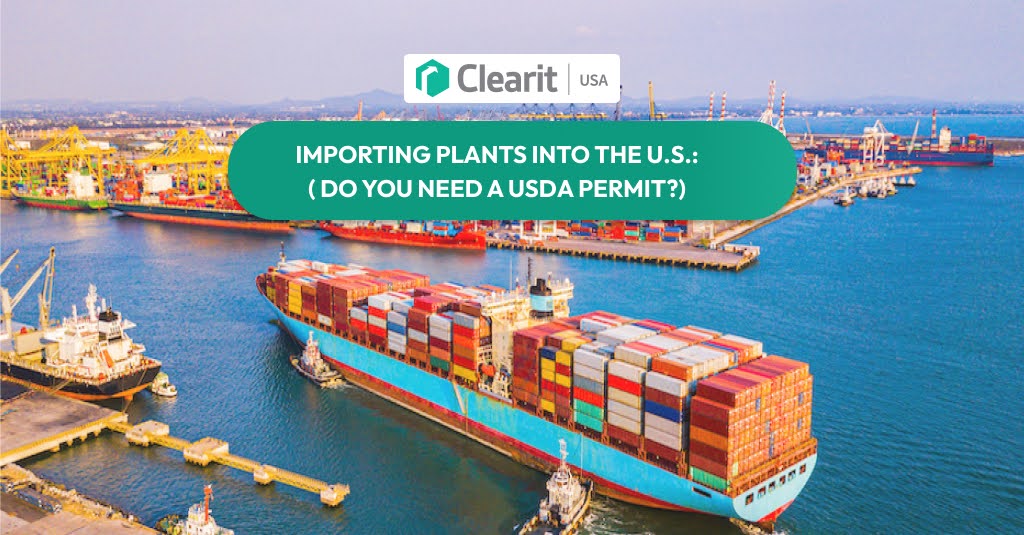
Importing plants into the United States isn’t like importing regular merchandise.
Plants aren’t just products, they’re biological material. That means they can carry pests, diseases, and contaminants that threaten U.S. agriculture and the environment. For that reason, the United States Department of Agriculture (USDA), along with U.S. Customs and Border Protection (CBP), strictly controls plant imports.
Many importers assume importing plants is simply a logistics challenge. In reality, it’s primarily a compliance process. If you don’t understand when a USDA permit is required, shipments can be delayed, destroyed, or refused entry entirely.
This guide explains when plant import permits are required, when they aren’t, what additional documents you may need, and why getting it right from the start matters.
Who Actually Regulates Plant Imports Into the U.S.?
Two primary authorities oversee plant imports:
- USDA APHIS (Animal and Plant Health Inspection Service) – Sets plant health regulations, decides when permits are needed, and determines what can or cannot enter the country.
• U.S. Customs and Border Protection (CBP) – Enforces those regulations at the border.
Depending on what you are importing, some shipments may also involve:
- State-level agricultural restrictions
• Environmental regulations
• Special risk-based rules
So while your shipment may look simple, the compliance layers often aren’t.
If you’re transitioning from small parcels to formal entries, this shift is explained in detail in From Section 321 to Formal Entry.
Do You Need a USDA Permit to Import Plants?
In many cases, yes, but not always. The answer depends on what type of plant material you are importing and how it will be used.
Generally, a USDA permit is required if you are importing:
- Live plants
• Nursery stock
• Plant cuttings
• Seeds for planting
• Plant material attached to soil
• Plant material intended for propagation
Commercial importers, nurseries, garden suppliers, landscaping businesses, and even e-commerce sellers need to pay particular attention. The more “alive” and biologically active the material, the more likely a permit is required.
If you’re unsure whether your plant requires a permit, assume it might, and verify before shipping. Guessing at the border rarely goes well.
When You May Not Need a USDA Permit
Not every plant-related product requires a USDA permit. In some cases, processed or treated plant products fall outside permit requirements.
Examples include:
- Certain dried or fully processed plant materials
• Some seeds that are not for planting
• Fully treated wood or lumber products under specific conditions
However, there’s an important distinction:
- “No permit required” does not mean “no regulation applies.”
- Many of these items are still subject to inspection, declaration requirements, and country-of-origin restrictions. They simply fall under different controls.
Assuming compliance doesn’t exist because a permit isn’t required is one of the fastest ways to encounter trouble at the border.
Additional Requirements Beyond the Permit
Even if you have a USDA permit, other documents are often still required.
Most plant imports require:
- A phytosanitary certificate from the exporting country
• Correct botanical identification
• Country-of-origin compliance
• Packaging that prevents pest introduction
In some cases, plants may also be subject to:
- Quarantine
• Mandatory fumigation
• Inspection upon arrival
Documentation accuracy matters. If species names are vague, mislabeled, or incomplete, CBP and USDA may refuse entry.
Learn how valuation and origin accuracy tie into refunds here.
Why Plant Shipments Get Delayed, Refused, or Destroyed
Most issues come down to preventable mistakes.
Common problems include:
- Missing USDA permit
• Missing phytosanitary certificate
• Incorrect or incomplete species identification
• Soil contamination
• Attempting to bring in restricted or prohibited items
If something is flagged as a biosecurity risk, the default response isn’t negotiation, it’s usually destruction, re-export, or costly remediation.
What Happens If You Import Plants Without the Right Permit?
Importing plants without complying with USDA requirements doesn’t just risk inconvenience, it carries consequences.
You may face:
- Shipment refusal
• Destruction of goods
• Significant delays
• Fines or penalties
• Increased scrutiny on future shipments
For commercial importers, that also means:
- Business interruption
• Customer dissatisfaction
• Potential legal exposure
Compliance is almost always cheaper than correction.
How to Import Plants Into the U.S. the Right Way
A structured approach helps keep things predictable.
Step 1: Identify exactly what plant material you are importing
Step 2: Confirm whether a USDA permit is required
Step 3: Apply for the necessary permit (if required)
Step 4: Ensure the exporter provides a valid phytosanitary certificate
Step 5: Prepare compliant shipping and documentation
Step 6: Ensure inspection readiness
Step 7: Clear through customs with a knowledgeable broker
Rushing any of these steps increases risk.
Why This Matters Even More Today
Plant importing isn’t just for large nurseries anymore.
Increasingly, we see:
- Online plant sellers
• Rare and exotic plant imports
• Commercial greenhouse imports
• Landscaping supply imports
• Research and institutional shipments
At the same time, enforcement has increased, driven by stronger environmental protections and agricultural safeguards. That means mistakes that once slipped through often don’t anymore.
Conclusion
Importing plants into the U.S. isn’t complicated when you understand the rules. It only becomes complicated when businesses treat it like standard importing.
A USDA permit may or may not be required, but compliance always is.
Understanding permit requirements, documentation expectations, and inspection processes ensures shipments move smoothly, customers stay happy, and your business avoids unnecessary risk.
Compliance isn’t a barrier. It’s the reason your shipment arrives.
Working with a digital broker simplifies cost predictability, outlined in Clearit’s stress-free importing guide.
FAQs
Do I always need a USDA permit to import plants?
No, but many live plants, seeds for planting, and propagation materials do.
Do personal plant imports require permits?
Often yes, depending on the plant type and risk profile.
Do I still need documents if no permit is required?
Usually yes, inspection and documentation rules still apply.
Can plants be mailed or couriered?
They can, but permits and certificates may still be required.
What happens if I get it wrong?
Expect delays, refusal, or destruction, and potential penalties.