
Importing building materials into the United States has never been simple, but in 2025, it has become significantly more complex.
With higher tariffs, stricter documentation requirements, and intensified enforcement following the end of De Minimis, U.S. Customs and Border Protection (CBP) now exp
Building materials are considered high-risk commodities for several reasons:
- Wide tariff variation by material and processing method
- Frequent misclassification (especially with composites and finished goods)
- Country-of-origin sensitivity (China, Vietnam, Turkey, Mexico, Canada)
- Exposure to anti-dumping (AD) and countervailing duties (CVD)
- Common undervaluation issues
As CBP increases enforcement through data analytics and targeted audits, these shipments are often reviewed more closely.
Learn more about the current CBP enforcement environment here.
Common Building Materials Imported into the U.S.
Some of the most frequently imported construction products include:
- Ceramic and porcelain tiles
- Natural stone (marble, granite, quartz)
- Engineered stone and slabs
- Cabinets and casework
- Doors and windows
- Sanitary fixtures
- Hardware and fittings
- Lumber and wood products
- Steel and aluminum components
Each category has unique tariff rules and documentation requirements, and getting them wrong can dramatically change landed cost.
Understanding Tariffs on Building Materials
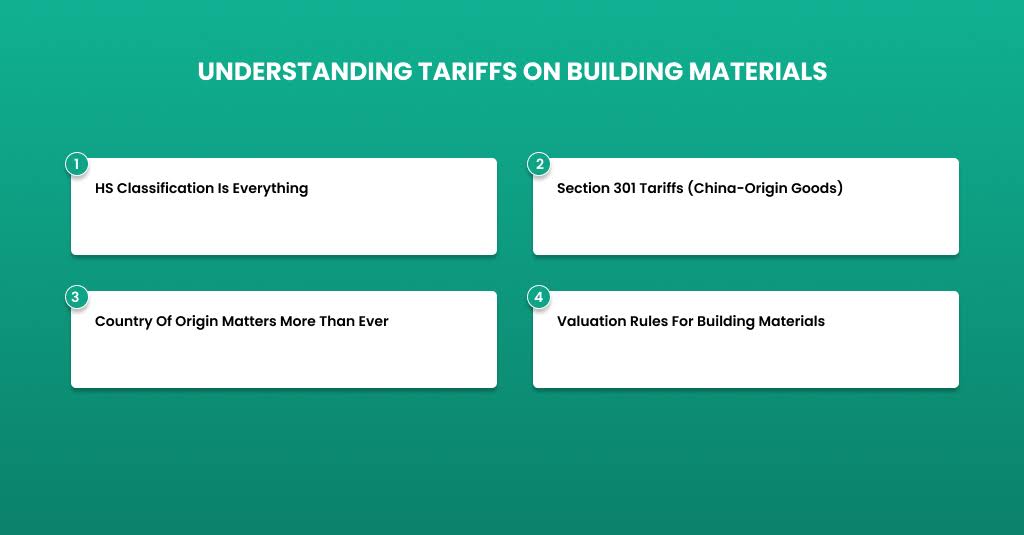
Tariffs on building materials vary by HS code, origin, and manufacturing process, making correct classification essential.
1. HS Classification Is Everything
Tariffs are determined by the 10-digit U.S. HTS code, not by what the product is called commercially.
For example:
- Ceramic tile vs porcelain tile
- Natural stone vs engineered stone
- Unassembled cabinets vs finished furniture
Small classification differences can result in:
- Higher base duty rates
- Section 301 tariffs
- Anti-dumping exposure
Misclassification is one of the top triggers for CBP audits.
2. Section 301 Tariffs (China-Origin Goods)
Many building materials sourced from China remain subject to Section 301 tariffs, ranging from 7.5% to 25%, on top of normal duty.
Affected products often include:
- Cabinets
- Fixtures
- Hardware
- Stone and tile products
These duties apply even if goods transit through another country.
3. Country of Origin Matters More Than Ever
CBP determines origin based on:
- Substantial transformation
- Manufacturing processes
- Material sourcing
Incorrect origin declarations can lead to:
- Penalties
- Retroactive duty bills
- Denied refund claims
This is especially relevant for importers seeking relief through trade programs or refunds.
Learn more about refund eligibility tied to origin and valuation here.
4. Valuation Rules for Building Materials
CBP expects:
- Accurate transaction value
- Clear breakdowns for tooling, molds, assists
- No artificial price splitting
Some importers can legally reduce duty exposure by using structured valuation methods like the First Sale Rule, but only when documentation is airtight.
Required Documentation for Importing Building Materials
Every shipment must be supported by complete, accurate documentation. Missing or vague paperwork is the fastest way to trigger a hold.
1. Commercial Invoice (U.S.-Ready)
Must include:
- Detailed product descriptions (material, finish, use)
- HS codes
- Country of origin
- Unit value and total value
- Currency
- Incoterms
Generic descriptions like “construction materials” or “tiles” are a red flag.
2. Packing List
CBP uses packing lists to verify:
- Quantities
- Weights
- Carton and pallet counts
Discrepancies between invoice and packing list often lead to inspections.
3. Bill of Lading / Airway Bill
Confirms:
- Shipper
- Consignee
- Routing
- Mode of transport
This must align with entry data filed in CBP’s ACE system.
4. Country of Origin Documentation
Depending on material type:
- Manufacturer declarations
- Mill certificates (steel, aluminum)
- Wood origin documentation
5. PGA (Partner Government Agency) Requirements
Some building materials fall under additional agencies:
- EPA (coatings, chemicals, adhesives)
- CPSC (consumer-facing fixtures)
- USDA (wood and plant products)
Missing PGA filings result in automatic clearance delays.
From Courier Shipments to Formal Entry: A Critical Shift
Many importers previously relied on courier shipments and low-value thresholds for samples or small orders.
That approach no longer scales under current CBP enforcement.
Building materials almost always require:
- Formal customs entry
- Importer of Record designation
- Continuous bond
- Broker-filed ACE entries
If you’re transitioning from small shipments to bulk importing, this importers guide explains the shift.
Common Mistakes Importers Make
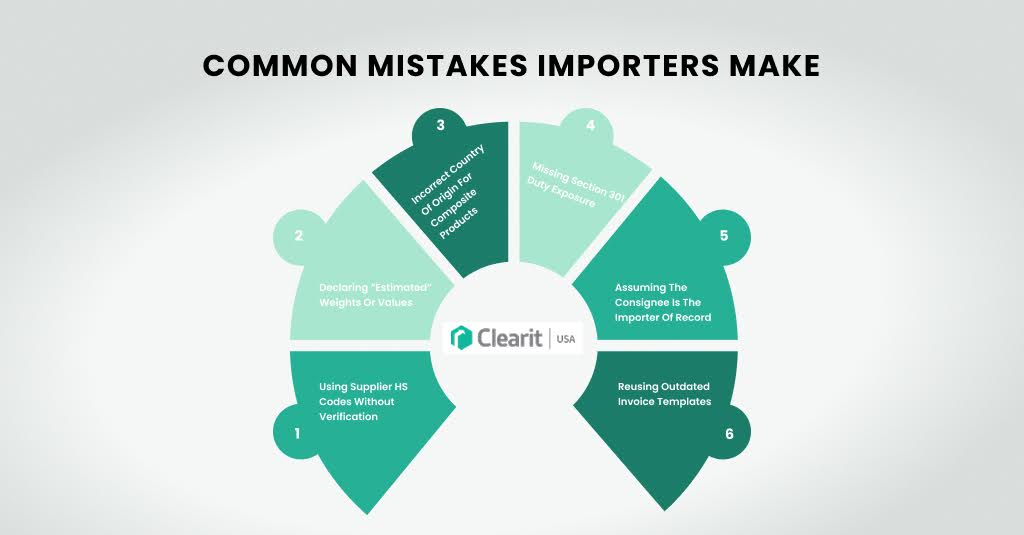
- Using supplier HS codes without verification
- Declaring “estimated” weights or values
- Incorrect country of origin for composite products
- Missing Section 301 duty exposure
- Assuming the consignee is the Importer of Record
- Reusing outdated invoice templates
These errors often surface after goods arrive, when fixing them is most expensive.
How to Import Building Materials Smoothly in 2025
Step 1: Pre-Classify Every SKU
Confirm HS codes before shipping, not at the port.
Step 2: Standardize Supplier Documentation
Provide invoice templates and mandatory data fields.
Step 3: Confirm Importer of Record (IOR)
Clarify who is legally responsible before filing.
Step 4: Validate Valuation and Origin
Ensure values and origin declarations are defensible.
Step 5: Pre-Clear with a Customs Broker
Errors caught early prevent costly holds.
A simple framework for setting this up is available here.
Conclusion
Importing building materials into the U.S. in 2025 requires more than logistics, it requires structured compliance.
Tariffs, valuation, origin rules, and documentation must all align. When they don’t, costs rise quickly through delays, penalties, and missed refund opportunities.
Before your next shipment leaves the factory floor, make sure your import process is built to withstand CBP scrutiny.
Start with a clean, compliant foundation here.
FAQs
Do building materials always require formal customs entry?
Yes, in most cases, especially bulk, palletized, or containerized shipments.
Are tariffs the same for all tiles or stone?
No. Tariffs vary by material, processing, and origin.
Can I reduce duties legally?
Yes, through proper classification, valuation strategies, and origin analysis.
Do building materials get inspected more often?
Yes. Weight, value, and material inconsistencies often trigger reviews.
Can CBP audit past building material imports?
Yes. CBP can audit imports going back five years, and in some cases longer.