

Global shipping in 2026 doesn’t look like it did just a few years ago.
International freight is no longer just about moving containers from origin to destination. It’s now tightly connected to customs compliance, cost visibility, enforcement risk, and post-import accountability. Importers who still treat freight as a standalone logistics expense are discovering too late that shipping decisions directly affect duties, audits, and profitability.
As enforcement increases and informal importing models disappear, freight has become part of the customs process itself.
This guide explains the major international freight trends shaping 2026, and what U.S. importers need to do to stay in control.
Freight Is No Longer Separate From Customs Compliance
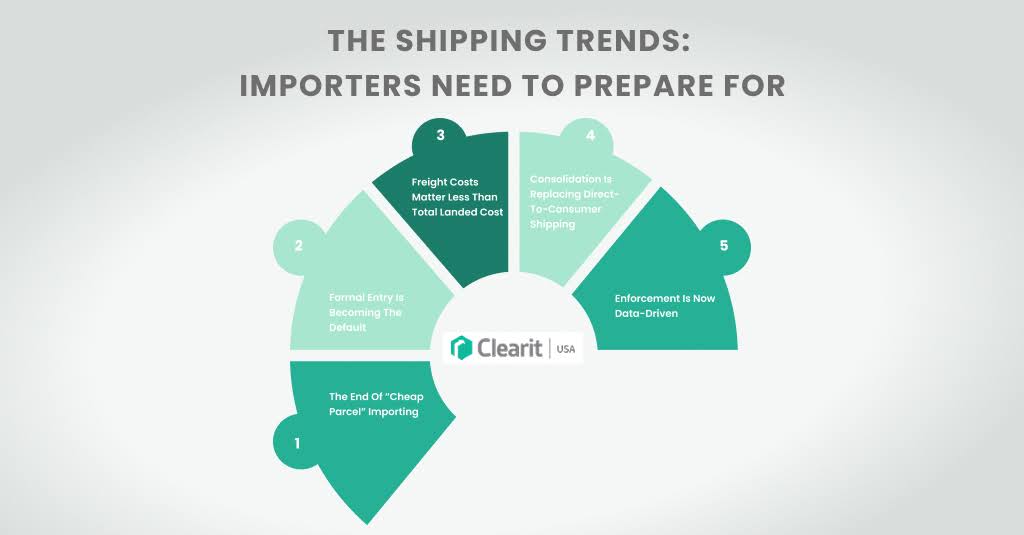
Major shipping trends shaping importer strategies in 2026
For years, many importers treated freight and customs as two separate steps.
You booked a shipment.
A broker cleared it.
The goods arrived.
That model no longer works.
In 2026, freight decisions influence:
- Whether a shipment requires formal customs entry
• Who is legally responsible for compliance
• How duties are assessed
• Whether CBP flags the entry for review
This is especially important when understanding who is actually accountable for an import, which depends on the relationship between the importer of record, consignee, and owner. If these roles aren’t clearly defined, freight and compliance risk increase significantly. Clearit breaks this down in detail here.
Trend 1: The End of “Cheap Parcel” Importing
For years, Section 321 allowed shipments under $800 to enter the U.S. duty-free, with minimal oversight. Many e-commerce and DTC brands built entire supply chains around this model.
In 2026, that strategy no longer scales.
CBP is now closely monitoring:
- Repeated low-value shipments
• Shipment splitting
• High-frequency imports from the same sellers
• Foreign suppliers shipping directly to U.S. customers
As a result, many businesses are being forced to transition into formal customs compliance models. This shift is explained in Clearit’s breakdown of how beta shipments and post-De Minimis enforcement are changing import compliance.
Trend 2: Formal Entry Is Becoming the Default
As informal importing declines, formal customs entry is becoming standard for many businesses.
That means importers are now operating within the full U.S. customs lifecycle—from entry filing through post-import review and liquidation. If you’re unfamiliar with how this process works end-to-end, Clearit’s guide to the lifecycle of an import under U.S. Customs provides a helpful overview.
While formal entry comes with more responsibility, it also provides more control.
Importers gain the ability to:
- Correct classification errors
• Manage country-of-origin declarations
• Claim refunds
• Handle post-entry adjustments
• Reduce long-term audit exposure
This trade-off is becoming unavoidable in 2026.
Trend 3: Freight Costs Matter Less Than Total Landed Cost
Freight rates still fluctuate, but in 2026, the bigger issue for importers isn’t the shipping rate itself. It’s total landed cost.
True landed cost includes:
- International freight
• Fuel and congestion surcharges
• Duties and tariffs
• Brokerage fees
• Government charges
• Exams, holds, and storage
A shipment that looks profitable based on freight alone can quickly lose margin once customs costs are finalized. That’s why more importers are shifting toward landed-cost-first decision-making, as outlined in Clearit’s guide to estimating total landed cost before importing.
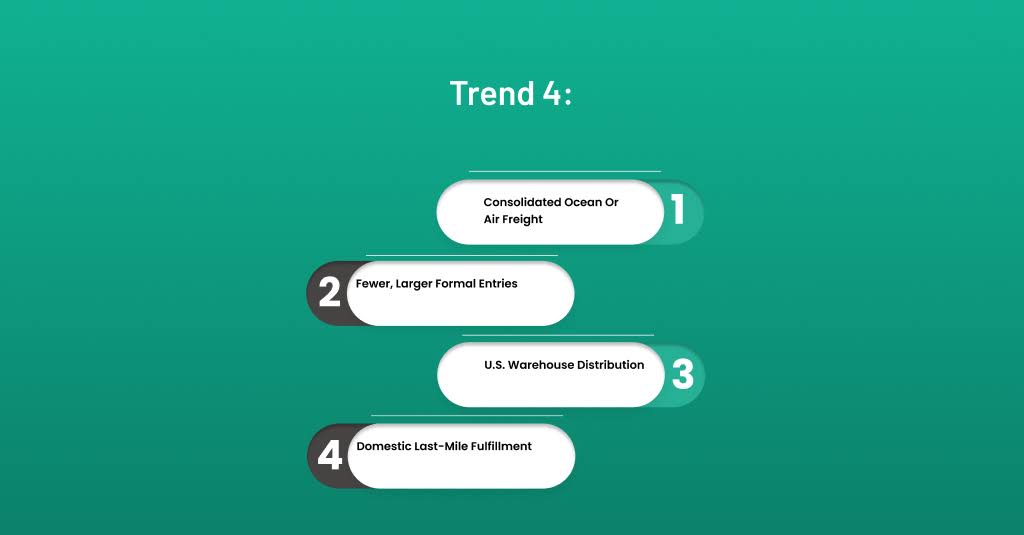
Trend 4: Consolidation Is Replacing Direct-to-Consumer Shipping
Why consolidated freight is replacing direct-to-consumer shipping models
Instead of shipping thousands of small parcels, many importers are restructuring around:
- Consolidated ocean or air freight
• Fewer, larger formal entries
• U.S. warehouse distribution
• Domestic last-mile fulfillment
This approach reduces per-unit shipping costs and creates cleaner customs records.
It also simplifies post-import management, including liquidation, the final step where CBP officially closes an entry and confirms duties owed or refunded. Many importers overlook this stage, even though it determines the true cost of an import. Clearit explains this in detail in its guide to U.S. customs liquidation.
Trend 5: Enforcement Is Now Data-Driven
CBP no longer relies on random inspections.
In 2026, enforcement is driven by data.
CBP analyzes:
- Import frequency
• Entry types
• Declared values
• HS classifications
• Origin patterns
• Freight behavior
When inconsistencies appear, importers face audits, reassessments, and enforcement actions. This is why more businesses are encountering post-import audits, even without obvious red flags. Clearit’s guide to U.S. import audits explains what triggers them and how to prepare.
What Importers Should Be Doing in 2026
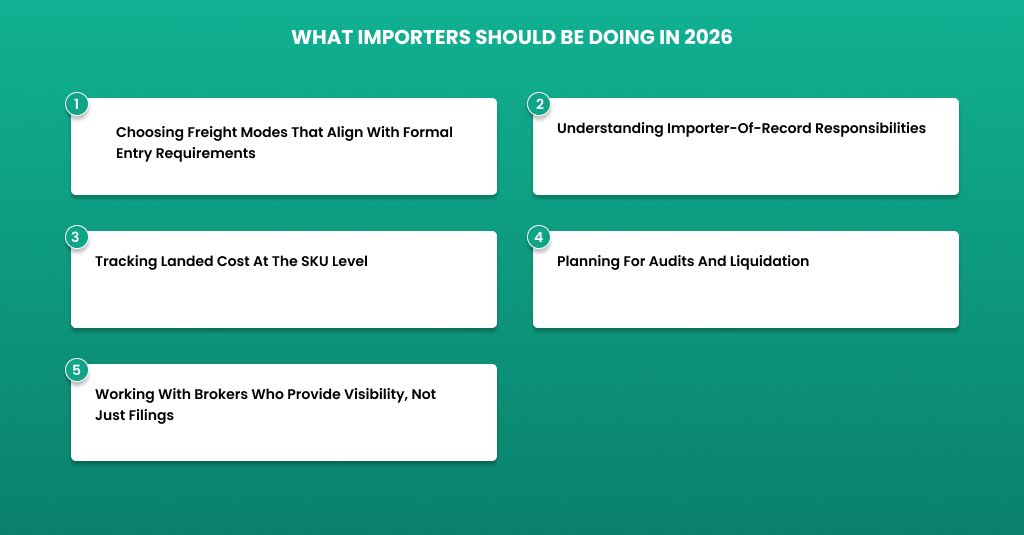
Key actions importers should take to stay compliant in 2026
Successful importers are no longer chasing the lowest shipping rate. They’re building freight strategies that support compliance and growth.
That means:
- Choosing freight modes that align with formal entry requirements
• Understanding importer-of-record responsibilities
• Tracking landed cost at the SKU level
• Planning for audits and liquidation
• Working with brokers who provide visibility, not just filings
International freight decisions now shape long-term compliance outcomes.
Conclusion
In 2026, international freight is no longer just a logistics decision. It’s a customs decision. A cost decision. A compliance decision.
Importers who understand how freight choices affect landed cost, audits, and liquidation can scale predictably and protect margins. Those who don’t will continue to be surprised, by duties, delays, and enforcement.
The future of global shipping isn’t about faster delivery. It’s about smarter importing.
FAQs
Is Section 321 still usable in 2026?
Yes, but only for genuinely low-volume, non-commercial shipments. High-frequency use is heavily enforced.
Is formal entry more expensive?
Not when duties, refunds, and risk are accounted for.
Why are more shipments being audited?
Because CBP now uses pattern-based, data-driven enforcement.
Is consolidated freight replacing parcel shipping?
For most scaling importers, yes.
How do I know which freight model is right for my business?
By evaluating landed cost, compliance exposure, and long-term growth plans.


